

Just as ODNR was starting to get on their financial feet again, House Bill 33 pulls the rug out from under them, adds new restrictions to wildlife officers, and sets a new date for Ohio’s deer gun season. The House budget bill now before the Senate includes some ominous changes for both Wildlife and State Parks.
Parks & Watercraft requested $57 million, but will receive, if the bill passes, $41 million. All but two of ODNR’s general revenue funds were reduced or eliminated. In all ODNR’s funding was reduced by $27 million for 2024 and $27 million for 2025.
The most significant budget concerns are Parks & Watercraft’s budget was reduced by $16 million which will result in less law enforcement and future hiring, and lack of staffing and maintenance personal at Lake Erie Islands, inland lakes, and staffing at visitor centers.
Other cuts include eliminating the Buckeye State Tree Nursery, the Conservation & Habitat Protection Fund, and Indian Lake vegetation management. Other ODNR projects to get the axe through this bill is the elimination of the Project Wild education program, contractually required pay raises for other divisions will not be funded due to cuts, hiring and pay raises for Natural Areas and Preserves has been axed. And monies from oil and gas wells used to pay for ODNR vehicles and provide funds for federal grant spending has been eliminated.
Some legislators would like to see ODNR get into the leasing business for state lands to make up for the budgetary cuts. This could mean leasing tracts of state wildlife areas, state forests, state park land to outfitters, guides, and other business interests. Will public land no longer be public but become semi-quasi private land because of a lease agreement between the business and the state? The leasing of these properties could be diverted for unapproved uses that
ODNR would be responsible for replacing. According to the Land & Water Conservation Fund, a 500-acre park that is being leased, the value of that property is $3,000.00 per acre would have to be replaced at a potential purchasing price of $1.5 million. Replacing these public lands would monetarily devastate ODNR.
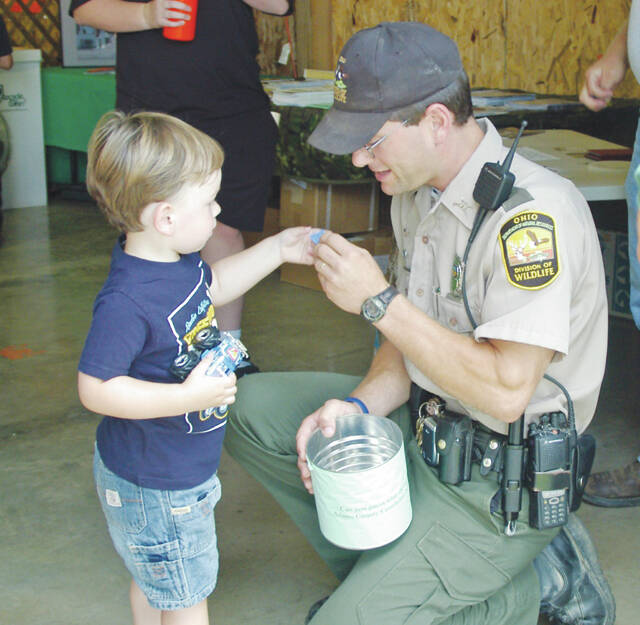
The second gut punch the Ohio House has delt to ODNR is new restrictions for wildlife officers with the Ohio Division of Wildlife. As it stands now wildlife officers do not need a warrant to cross, investigate, or be upon private land. According to the new House bill if passed without amendments would mean state wildlife officers would no longer be permitted to enter or search private lands, buildings or waters without first obtaining warrant. The language so reads on page 701 of House Bill 33, section 1531.13, the wildlife officer has good cause to believe and does believe that a law is being violated. The wildlife officer has obtained a warrant to search such private lands or waters. No arrest shall be made without first obtaining a warrant.
Section 1531.131 reads … A wildlife officer shall make arrests for violation of those laws and rules after obtaining a warrant to do so.
Section 1531.14 reads, any person regularly employed by the division of wildlife is not subject to arrest for trespass if…, that person has permission to enter, cross over, be upon or remain upon the land by the owner or occupant of the land …, or that person (division of wildlife employee) has obtained a warrant to enter upon, cross over, be upon, or remain upon the land.
In a third gut punch to the Division of Wildlife is the ability to set season dates in accordance to wildlife biologist recommendations and proposals. On page 700 of House Bill 33, section 1531.08 it reads, If the chief (of Division of Wildlife) regulates the taking of deer by means of gun in accordance with this section, … gun season is open beginning the Friday after Thanksgiving through the second Sunday following Thanksgiving in addition to any other time the chief may so designate.
The bill has passed the Ohio House and is now in the hands of the Senate Committee. The primary sponsor of the bill is Jay Edwards, of the 94th District, and Chairman of the Ohio House of Representatives Finance Committee. Mr. Edwards previously corresponded with Division of Wildlife Chief Kendra Wecker back in late February about the wisdom of the new trout stocking program as it concerns Forked Run State Park in Meigs County, which in a letter dated March 8 to Mr. Edwards from the chief, the Division of Wildlife reversed course and decided to continue stocking Forked Run with trout, …, “to better serve the constituents in Meigs County”.
In other news, last week Ohio Wildlife Officer Kevin Behr announced his retirement after a 30-year career which began as a creek clerk on the Ohio River in 1993. Kevin was first assigned to Warren County as a wildlife officer and later served as Adams County Wildlife officer from 1999 through 2006. Afterwards, Behr went on to be an investigator for the Division of Wildlife. In December 2020, during the last day of the late deer gun season, officer Behr was shot while investigating a deer poaching complaint. He survived but has wounds and injuries from that day he will forever carry. We wish him well and continued recovery.
Leave a Reply