
By Sherry Larson
People’s Defender
There is a place nestled on Mineral Springs Road in Peebles, Ohio called Hope Springs Institute. Perhaps you’ve heard about it. You may have wondered what this place is that has an air of mystery and some misunderstanding. When spending time on the land with their nurturing team, one finds their commitment to community and a space that for 25 plus years has given folks the room for healing – to receive and contribute. Jeanette Winterson speaks of poetry as a powerful language – a tough life requires such prose. She said, “It isn’t a hiding place. It is a finding place.” Hope Springs is a place of poetry.
Hope Springs claim, “We nurture people and organizations that desire to make a positive change in themselves and their communities.” And their core values are,
We believe in the inherent worth of every individual.
We value healing for ourselves, humankind, and the planet.
We practice theory-based and experiential learning that fosters the right relationship.
We believe in respect for ourselves, each other, and the land.
We value the land as a sacred teacher.
We practice an intersectional approach to our work that honors life’s natural diversity and the dignity of every being.
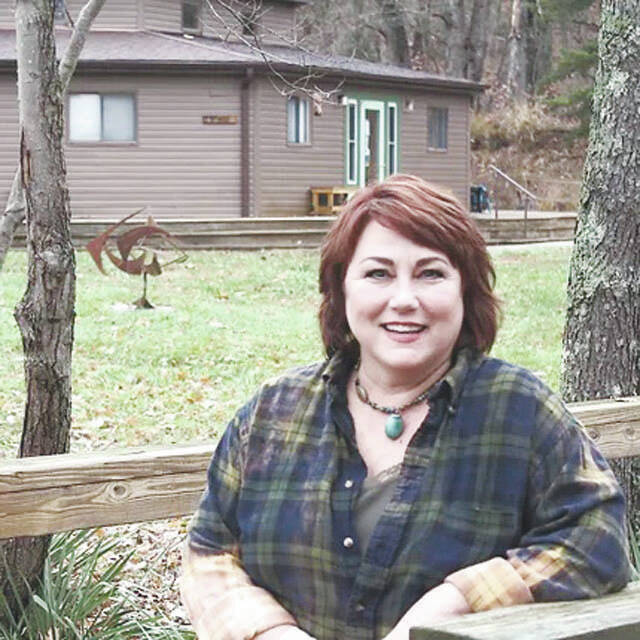
Victoria Brown, Executive Director of Hope Springs, grew up in Appalachia in Jackson County and attended Berea College in Berea, Kentucky. She spent five years in Columbus doing social work and social services for a large Headstart agency working heavily in equity and resource development. She desired to contribute to a place with a big creative license, as she described, “If you can think of it – it can happen. You just must find a means to get there.”
Brown learned about Hope Springs and planned a visit with the Executive Director then, but not for a job. She relates their lovely conversation about land justice, social equity, and sacred space. Then she returned home, chalking the experience up to a beautiful afternoon. However, about a year later, the director transitioned into a new position in another state, and Brown was offered the job. She shared, “I had a lot of experience when you look at those core values. I’m in deep alignment but never ran a retreat center.” But she loaded up and started her new position in March 2020 when the world was shutting down. She was mainly alone but said she cherished the time and opportunity to discuss the place and learn about its philosophical commitment and passion for community. “Our vision is a more peaceful, equitable, and inclusive world.”
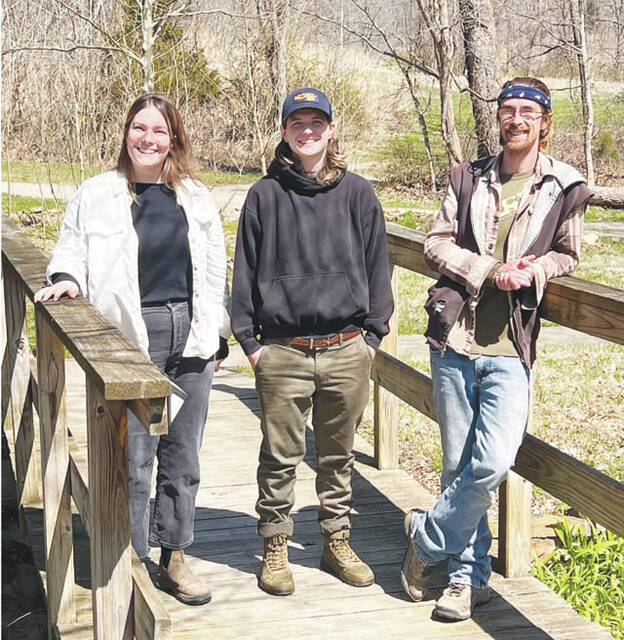
Things started up slowly in 2021. 2022 and 2023 are “true” calendar years. Brown and her leadership team, Operations Coordinator Betsy Pourvail, Land Manager Chip Blount, Executive Chef Blake Larson, and the other staff pour into their guests at each retreat. Last year they had 47 bookings and hosted nearly 800 people.
Pourvail is the group veteran, being a part of Hope Springs since 1998. She came as a participant and community member. When Brown came on board, Pourvail was hired as the Operations Coordinator. Pourvail wasn’t available for this interview, but Brown said, “She’s held this place for a whole generation. She was here at my age and now supports me while I’m here.”
Blount describes Hope Springs as his “happy place.” He’s served as the land manager and naturalist for two and a half years after graduating from Shawnee College – during the pandemic. Besides keeping the area tidy, his naturalist and ecological work is prevalent there, and he’s busy managing the woody species. Blount leads retreaters on hikes of the property and educates them along the way. For many urbanites, there isn’t much understanding of “natural spaces.” Brown explains that Blount has a beautiful way of describing reciprocity and nature, “If you’re going to receive from the land in the way of healing, peace, or gentleness, it would be beautiful if you do the work and learn.” Blount interjects, “And understand what the land is and why.”
Chef Blake is new to the team. Larson graduated from Liaison Culinary College in Ontario, Canada, in 2018 and has been honing her craft ever since. She came from Asheville, North Carolina just a few months ago, after spending time learning the art of food from line cook to Sous Chef, Executive Chef to a featured chef on a CNN segment last year. After Larson shared her culinary skills at an Adams County event, Pourvail sought her out pending the departure of their chef, Scott Claypool, who was transitioning to own and operate a catering business. Larson said of Hope Springs, “This position isn’t about egos, but about nourishment and food, and the connection we can hold in this safe place. It’s a really needed place here. It’s a beautiful place with people that don’t have judgments about anyone.”
The programs and retreats held at Hope Springs vary from faith communities, professional organizations and strategic planning, healing and restorative retreats, rest retreats, silent retreats, and many more. They faithfully believe in experiential learning to create transformation and place-based experiential learning, meaning that the environment (the place you are learning) matters. There is a deep commitment to bringing peace into each participant’s being and a bigger picture of a more peaceful world. Brown said, “Our scope is pretty big, so if it’s not hurting anyone, and you believe that it’s creating change, and it’s safe for people to do, we can be at the back of it.”
There is much beauty and intrigue at Hope Springs. It isn’t easy to describe until you visit and experience it yourself. On April 15 and 16, Hope Springs will hold a fundraising retreat. They are a 501C3 nonprofit and must seek gifts of support. The event, “HOPE SPRINGS AWAKENS: A Sacred Support Retreat”, is centered around a favorite word, “reciprocity” – the “giving and receiving” message that Hope Springs imparts. The ticket price is $200 for the day-only retreat and $300 for the overnight retreat. Other support tiers are available. Chef Blake is serving a beautiful plated dinner. Attendees will enjoy sound healing and a wildflower hike with Blount and can choose to hang out by the fire or hot tub later in the evening. For overnighters, the next day will offer brunch. It’s a great way to build community and contribute to a place centered on healing and love. You can purchase your ticket at www.hopespringsinstitute.org.
Hope Springs believes that sacred looks like a slow transformation for the better within a person, community, and eventually within the world. Brown explains, “One way people look at is the I, the we, and the us. If you tend to the I, you can contribute to the we, and the we can hold the us.” It’s a natural cycle – if the us is well, the I is healthier too. The internal shift work at Hope Springs is sacred – growing peace and fostering healing in this poetic place.