
Lena was one of the most attentive, devoted and loving caregivers and mothers I’ve ever known. Nearly 80 years old, she provided 24-hour care to her bedridden 54-year old daughter, Charlotte. Lena slept on a hard tile floor beside Charlotte’s hospital bed in Charlotte’s efficiency apartment. When I encouraged Lena to sleep on the couch she graciously declined, stating, “I want to be as close to Charlotte as possible so I can hear her if she needs anything.” So, Hospice provided a small cot to place beside Charlotte’s hospital bed.
Lena and Charlotte were Christians and typically talked about God’s goodness, about their faith in Him. But during one of my visits the spiritual tone was somber, as if a cold mist had settled upon their hearts and souls. Lena was profoundly troubled. She showed me a book she’d been reading on the Holy Spirit and healing, from which she concluded, “If only I had enough faith Charlotte would be healed. After all, the Bible does say you only need faith the size of a mustard seed, doesn’t it? I guess I just don’t have enough faith.”
Lena started crying and I thought, “It’s not fair, not only is Lena losing her only child, but now she feels like a failure as a Christian and a mother.” We talked, we searched, we struggled, and we debated. I wanted to take away her burden, but couldn’t. I suspected she sensed that I too was struggling to clarify what I really believed. You know, it’s easy to confidently affirm when “lying down in green pastures” and standing “beside the still waters”, but things look and feel a lot different in “the valley of the shadow,”(Psalm 23).
I was still wrestling with my definition of faith when I pulled into the parking lot of their apartment building the following week. And by that time, I’d become angry about the burden of guilt and shame that Lena was unfairly shouldering; but what could I say to dispel or relieve it? That was the question I asked God as I sat in my car and prayed. Then there was a “still small voice,” (1 Kings 19:12); “Read Hebrews chapter 11”. So, I pulled my Bible off the dashboard of my car and commenced reading about the “elders” of the Christian faith, the “saints” that had gone before us, about how, “By faith Abel offered… Noah prepared… Abraham obeyed and …he went out not knowing where he was going… These all died in faith, not having received the promises, but having seen them afar off were assured of them, embraced them and confessed they were strangers and pilgrims upon the earth. For those who say such things declare they plainly seek a homeland “(Hebrews 11:13-14)
I realized that in the entire eleventh chapter of the Book of Hebrews, typically considered “the faith chapter”, that there wasn’t a single example of mustering up enough confidence to make things happen, of “naming it and claiming it”. The elders offered, prepared, obeyed, stepped out, and considered themselves pilgrims and strangers. I realized that true faith defined and exemplified in scripture is embracing the heart of a pilgrim.
Lena, Charlotte and I celebrated as we read and discussed Hebrews chapter 11 that day. We thanked God that life is more than what happens to us here. And Lena was freed of her burden of guilt and shame that day because “The truth will make you free” (John 8:32)
I’ll leave you to reflect upon an excerpt from the song, “My Temporary Home”, recorded by Carrie Underwood: “This is my temporary home; it’s not where I belong, windows and rooms that I’m passing through. This is just a stop on the way to where I’m going. I’m not afraid because I know; this is my temporary home.”
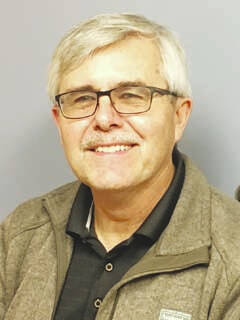
Loren Hardin is a social worker with SOMC-Hospice and can be reached at (740) 357-6091 or at lorenhardin53@gmail.com. You can order Loren’s book, “Straight Paths: Insights for living from those who have finished the course”, at Amazon and Barnes and Noble.